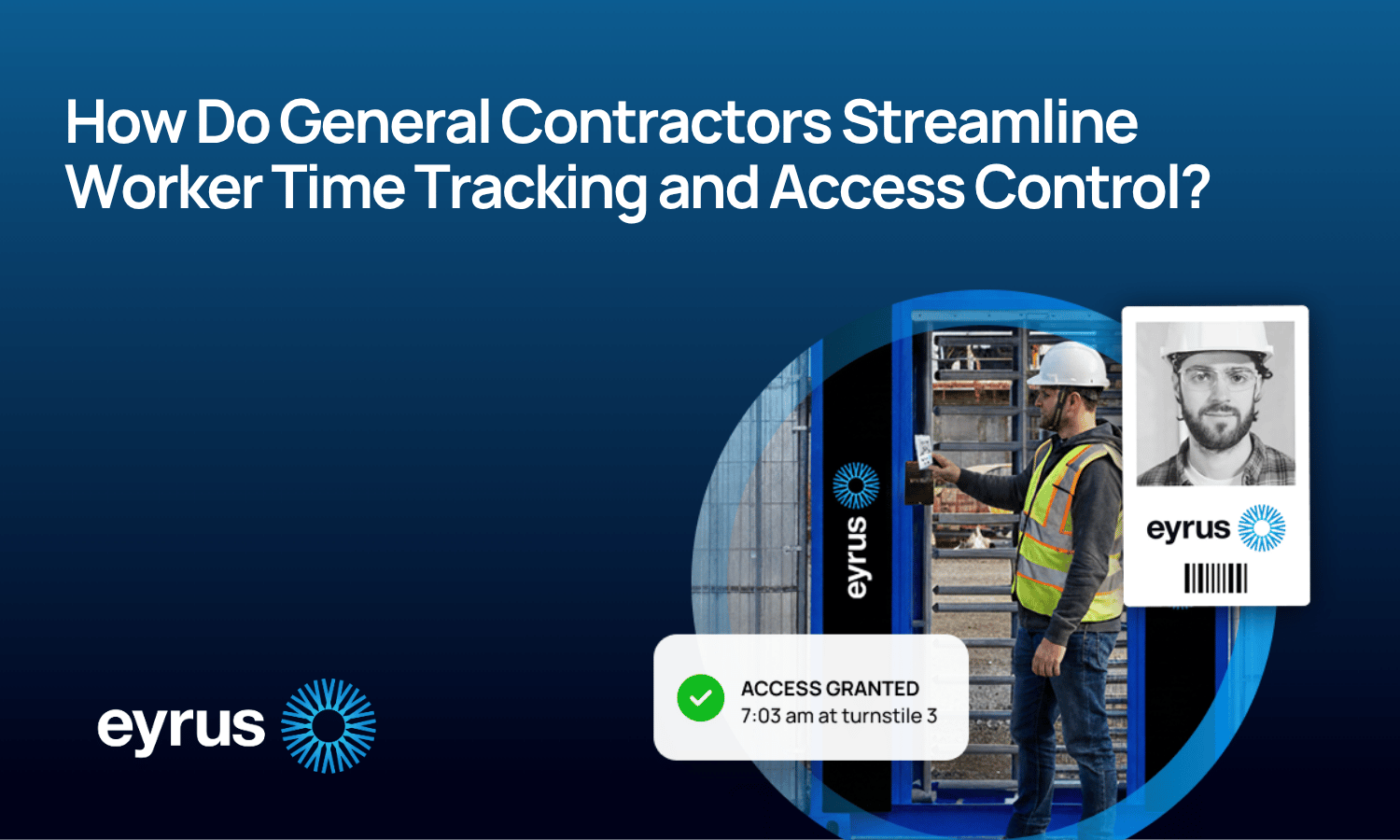
General contractors streamline worker time tracking and access control by replacing manual processes with integrated platforms that connect physical site entry to digital labor records — so every badge-in event automatically creates a time record, and every time record is tied to a verified site entry.
Here's how leading GCs are doing it in practice.
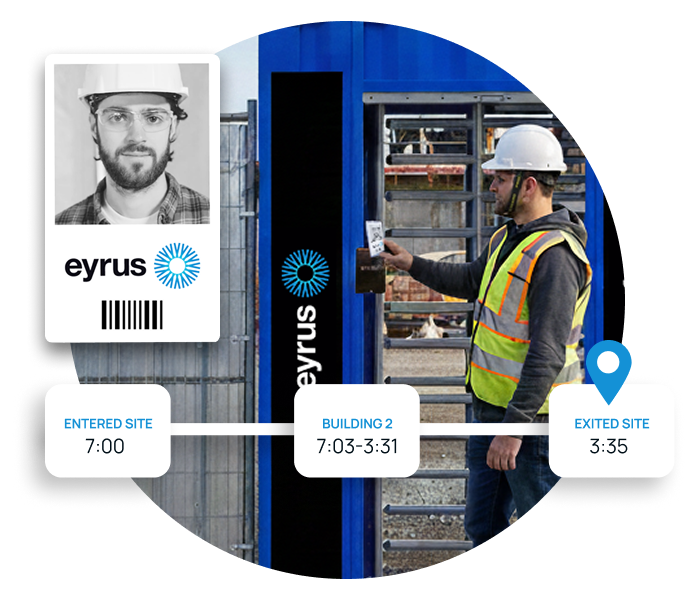
The most effective approach ties time tracking directly to access control. When a worker badges into a site — via a mobile app, a fixed kiosk, or an RFID reader — that event simultaneously logs their time, verifies their credentials, and adds them to the live headcount. There's no separate clock-in step, no manual entry, and no way to record time for someone who wasn't actually on site.
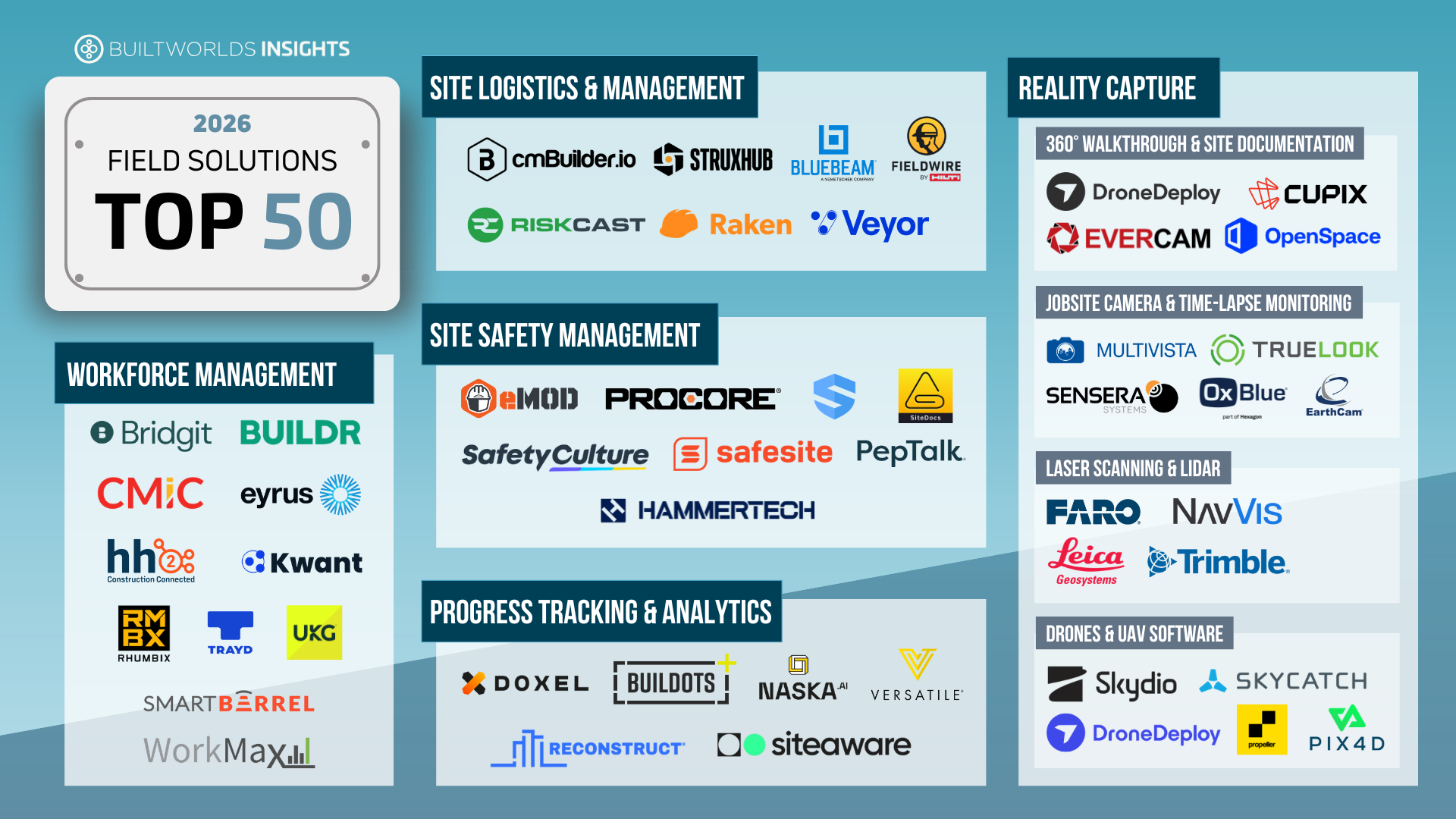
Platforms like Eyrus are built specifically for this model. Workers badge in at the gate, and the system handles the rest: start time, trade classification, company affiliation, certification status, and real-time headcount — all from a single entry event.
The goal isn't to give superintendents more data — it's to surface the right alerts automatically. GCs using integrated platforms set rules like:
This shifts the superintendent's job from data collector to exception handler. They're not reviewing timesheets — they're responding to alerts.
Multi-trade projects mean GCs are tracking their own crews alongside subcontractors and sub-subcontractors. The best platforms let each company see their own workers' data while the GC sees everything — without requiring every sub to be on the same software.
Eyrus, for example, allows subcontractors to manage their own worker profiles and credentials while the GC retains full-site visibility across all trades and tiers.
Time captured at the gate is only valuable if it flows into your project cost system without manual re-entry. GCs integrate their workforce platforms with ERPs like Sage, Viewpoint, and CMiC so that hours, cost codes, and trade classifications move automatically from the field to the office.
This eliminates end-of-week timesheet reconciliation — one of the biggest sources of payroll error and project cost variance in construction.
GCs who have fully streamlined workforce management share a few characteristics:
One source of truth for who's on site. Not a paper log, not a foreman's head count, not a spreadsheet. A live, verified record.
Access and time in the same system. When entry events and time records are separate, you spend time reconciling them. When they're the same event, that problem disappears.
Credential verification at entry. OSHA cards, safety certifications, and site-specific training are checked automatically at badge-in — not audited after an incident.
Offline capability. Remote sites lose connectivity. The platform has to capture data offline and sync automatically, or you're back to paper in the field.
Streamlining time tracking and access control isn't about adding technology — it's about collapsing what used to be three separate processes (signing in, clocking in, verifying credentials) into a single entry event. GCs who've made that shift report fewer payroll disputes, faster compliance audits, and superintendents who spend more time managing work and less time managing paperwork.