What if your safety program had an assistant that never took a lunch break, never missed a pattern in the data, and could flag a concern before it became an incident?
That's the promise of AI-powered workforce intelligence on the jobsite — and it's not hypothetical. It's happening now.
Fatigue causes problems on construction sites. A worker who's been on site 10+ hours a day for 7 consecutive days isn't just tired — they're statistically more likely to make the kind of mistake that leads to a recordable incident.
AI-driven workforce monitoring can automatically flag workers who exceed safe thresholds for consecutive days worked, extended shift lengths, or cumulative weekly hours. Instead of relying on a superintendent's gut feeling ("I think Dave's been here a lot lately"), the safety team gets a concrete, data-backed alert: "3 workers from ABC Electric have worked 5 consecutive days with shifts averaging 11.2 hours. Recommend mandatory rest day."
That's not micromanagement. That's injury prevention.
Modern jobsites have zones — and not every worker should be in every zone. Whether it's a confined space, an active crane radius, or an area with energized electrical systems, knowing who is where matters.
AI can monitor zone access in real time, cross-referencing a worker's trade, certifications, and assigned work areas against their actual location on site. If a laborer without confined space training enters a designated confined space zone, the system can trigger an immediate alert to the safety team — not at the end of the day during a log review, but right now, while there's still time to intervene.
Unlock your historical safety data. You compile hours, incidents, and observations to prove processes are working and to uncover how to change process. AI flips this model: leveraging past incident data and past workforce and worksite conditions to predict your risk areas for the day.
Imagine a predictive morning digest covering workforce consistency, workforce maturity, potential trade clashes, equipment locations, worker fatigue, weather forecasts, and much more -- combinations of conditions that lead to increased risk and where to dig in to lower that risk.
Humans are great at responding to events. We're not as great at spotting slow-moving trends. AI excels at this: gradually increasing average shift durations across a trade over three weeks. A specific zone where workers consistently cluster during non-work hours (potential hazard exposure). A subcontractor whose headcount is declining week over week (possible retention or morale issue that could impact safety culture).
These are the patterns that, if caught early, prevent the incident that "came out of nowhere" — because it never comes out of nowhere. There's always a data trail.
In an evacuation, the first question is always: "Is everyone out?" With real-time workforce tracking, AI can provide an immediate headcount by zone, identify who was last seen in affected areas, and generate a muster report in seconds — not the frantic clipboard-and-radio process that too many sites still rely on.
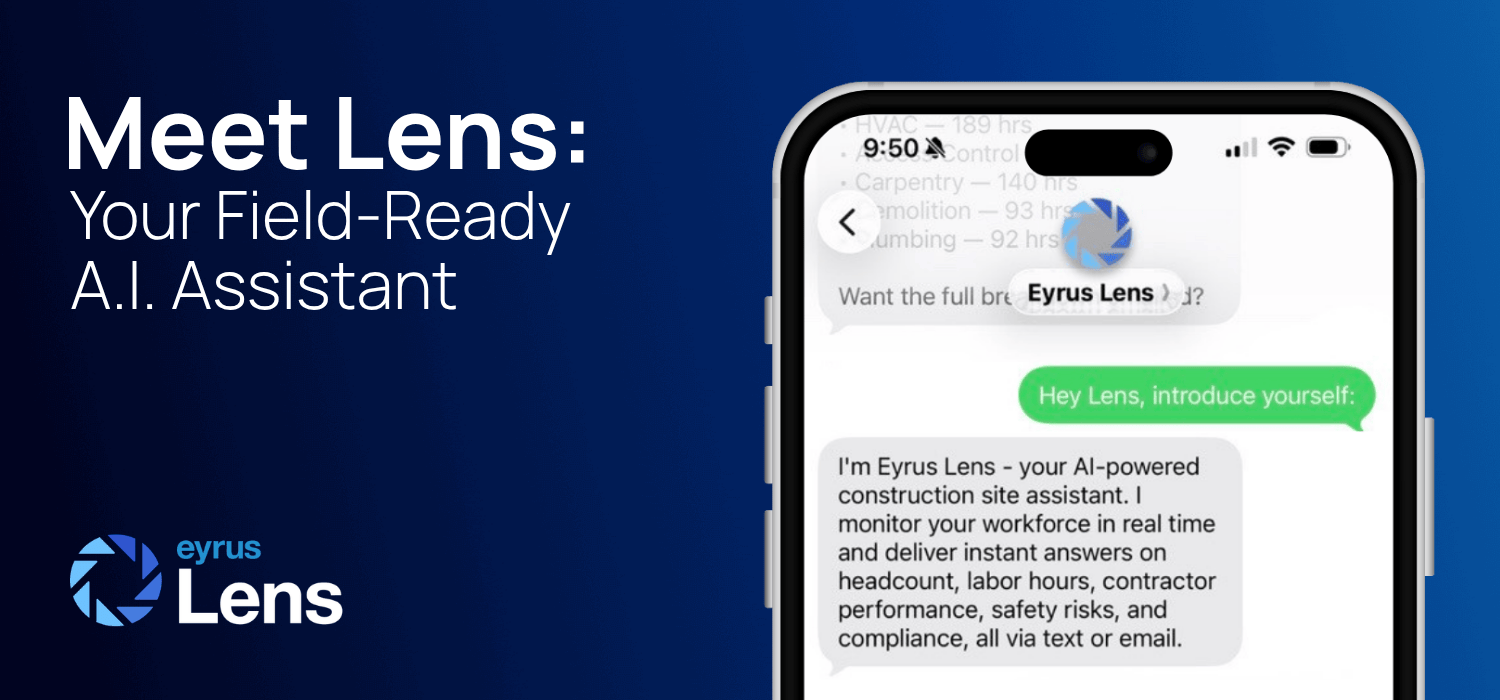
AI doesn't replace your safety team. It makes them faster, better informed, and more proactive. It turns workforce data — the data you're already collecting through badge readers and BLE sensors — into safety intelligence that actually prevents incidents.
The jobsite of the future isn't one with fewer safety managers. It's one where every safety manager has an AI partner that never sleeps, never misses a pattern, and always has the numbers ready.
Because in construction, the best safety incident is the one that never happens.